

There is a moment that happens on almost every haunted exploration, usually about ten minutes in. The group goes quiet. Somebody's flashlight sweeps a stone wall. The guide stops talking, and for a few seconds nobody fills the silence. Everyone is listening to a building.
You will not get that moment in a museum. You will not get it from a documentary, or a podcast, or a very good book read in a very comfortable chair. It only happens when you are physically standing inside a place where something real once happened, in the dark, with your nervous system fully switched on.
That combination: a real location, real history, and a small, controlled amount of fear, does something specific to the human brain. It makes you pay closer attention than you have in months. It welds the experience into your memory. And it turns a historic site from a thing you looked at into a place you were actually in.
This is why people travel thousands of miles to stand in a plague hospital, a castle keep, or an execution square. Here's what the research actually says about it, and what it means for the way you plan a trip.
Key Takeaways
- Fear feels good when your brain knows you're safe. Your body reacts to a dark corridor as though the danger were real. When the thinking part of your brain confirms there's no threat, that leftover arousal converts into excitement, relief, and laughter.
- Fear makes memories stick. Emotional arousal strengthens how strongly an experience is encoded. It's one reason a night in a centuries-old castle stays vivid for years while an afternoon of ordinary sightseeing blurs.
- Everyone has a fear “sweet spot.” Research shows enjoyment peaks at moderate levels of fear. Too little is boring, too much stops being fun, and knowing where yours sits is genuinely useful when choosing a trip.
- Dark tourism is a recognized field, not a fringe habit. The term was coined by academics in 1996, and ghost walks have been studied as a mobile form of it. Travelers have been drawn to sites of death and tragedy for as long as travel has existed.
- The best haunted places have real history underneath. Poveglia, Castel Sant'Angelo, Campo de' Fiori: the documented history came first, and it's usually more unsettling than the legend built on top of it.
- The point isn't proving ghosts exist. It's using curiosity, atmosphere, and a bit of adrenaline as a way into history that dates on a plaque can't give you.

What Happens in Your Brain When You're Scared?
Fear is one of the oldest emotions we have. Long before haunted attractions or horror films, it kept our ancestors alive by making them react instantly to movement in the dark. Understanding that machinery explains a lot about why certain destinations affect us the way they do.
Your Built-In Alarm System
When you perceive something that might be threatening- a shape at the end of a corridor, a sound in an empty room above you- a small, almond-shaped structure called the amygdala reacts almost instantly, often before you are consciously aware of what you noticed.
It signals the hypothalamus, which activates the sympathetic nervous system: the fight-or-flight response. Adrenaline and cortisol are released. Your heart rate climbs, your breathing quickens, your pupils widen, and your muscles tense. In a fraction of a second, your body is prepared to run.
The Second Look
While your body is reacting, a slower part of your brain, the prefrontal cortex, is evaluating. Is that a figure or a coat on a hook? Is that footsteps overhead or the building settling?
When your thinking brain confirms there's no real danger, the physical arousal is still there, but the context has changed. Psychologist Dolf Zillmann described this as excitation transfer: leftover arousal intensifies whatever emotion comes next. Relief becomes euphoria. A gasp turns into laughter. It's why groups so often crack up together seconds after something makes them jump.
This is the entire mechanism behind recreational fear. The same reaction that would be terrifying in a genuine emergency becomes thrilling when you feel in control, when you know you can step outside, turn on a light, or simply remind yourself that you're a visitor here.
Why Fear Makes Travel Memories Permanent
Here's the part that matters most for travelers. Emotional arousal strengthens memory. The amygdala helps flag emotionally charged moments for stronger encoding, which is why you can still describe a scary story you heard as a child in more detail than you can describe last Tuesday.
Apply that to travel and something interesting emerges. Most trips produce a handful of genuinely sharp memories surrounded by pleasant fog. But an evening spent in a place that raised your heart rate tends to survive intact — the temperature of the room, where you were standing, who grabbed whose arm, what the guide said just before everyone went quiet.
Haunted travel isn't more memorable because ghosts are real. It's more memorable because of how your brain files emotionally intense experiences.
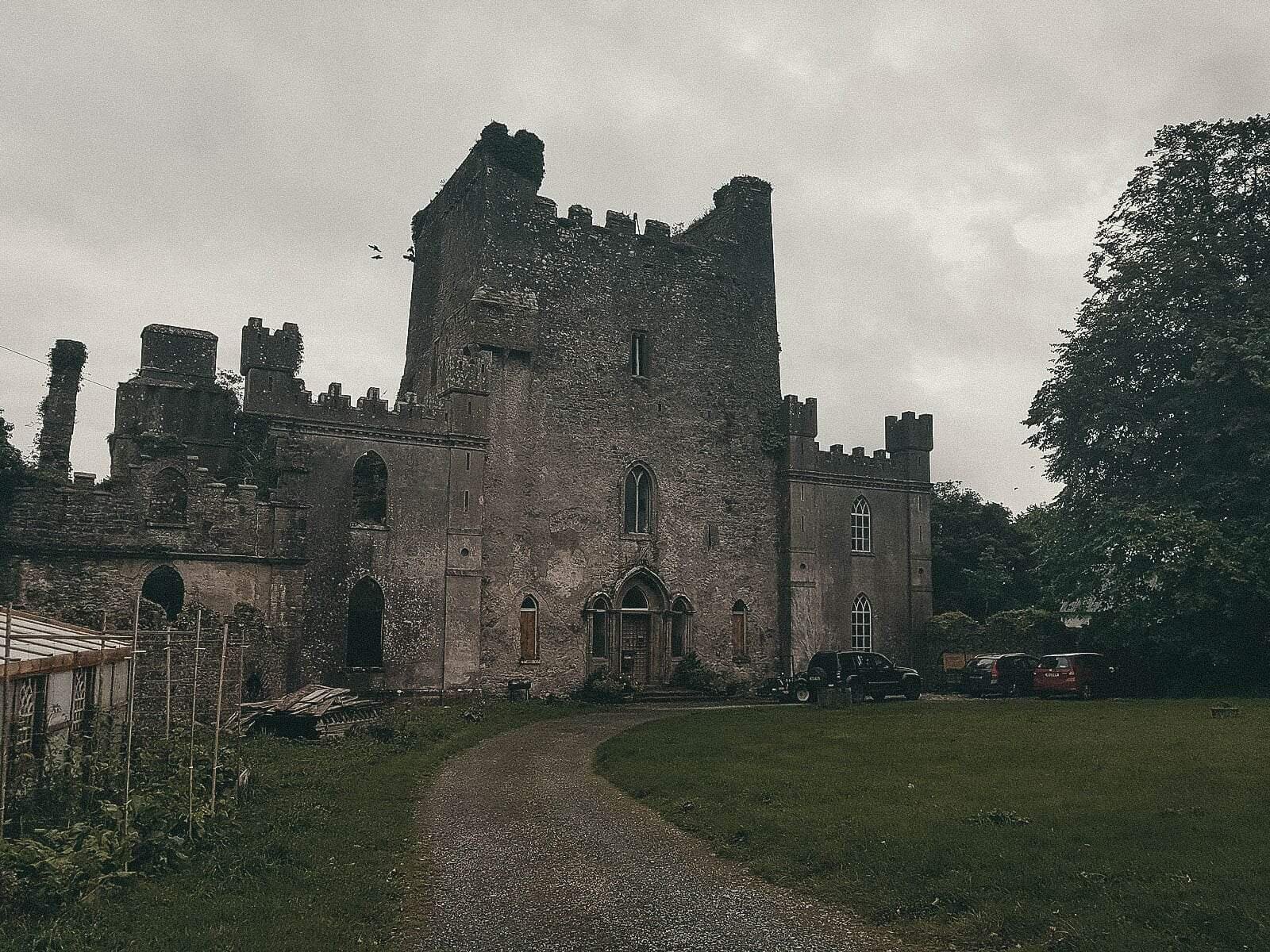
Why Fear Changes the Way You See a Historic Site
Anyone who has done both will tell you that visiting a castle at two in the afternoon and visiting the same castle after dark are not the same activity. There are reasons for that beyond atmosphere.
It Forces You Into the Present
Ordinary sightseeing is surprisingly passive. You walk, you look, you photograph, you half-listen, you think about lunch. Mild fear shuts that down. Your senses sharpen, your attention narrows to your immediate surroundings, and the phone goes into your pocket because you'd rather have your hands free.
Presence is the thing most travelers say they want and most rarely achieve. A dark staircase delivers it involuntarily.
It Turns History Into Something You Feel
A plaque can tell you that a room was used for interrogations. Standing in it after dark, hearing how sound behaves in there, noticing how far it is from any window. That's a different kind of knowledge.
This is the honest argument for haunted travel: it's one of the most effective ways to make history land emotionally. The people who were confined, tried, quarantined, or executed in these places were not abstractions. Being in the room makes that unavoidable in a way a textbook never manages.
It Exploits the Brain's Need to Fill Gaps
In low light and unfamiliar architecture, your perceptual system does what it always does. It makes its best guess and presents that guess to you as a fact. Shapes resolve into figures. Ambiguous sounds acquire direction and intent.
That's not a reason to dismiss unexplained experiences. It's a reason the environment itself is part of the experience. A guide who knows the building well can tell you which sounds have known causes and which ones nobody has ever been able to explain, and that distinction is far more interesting than a jump scare.
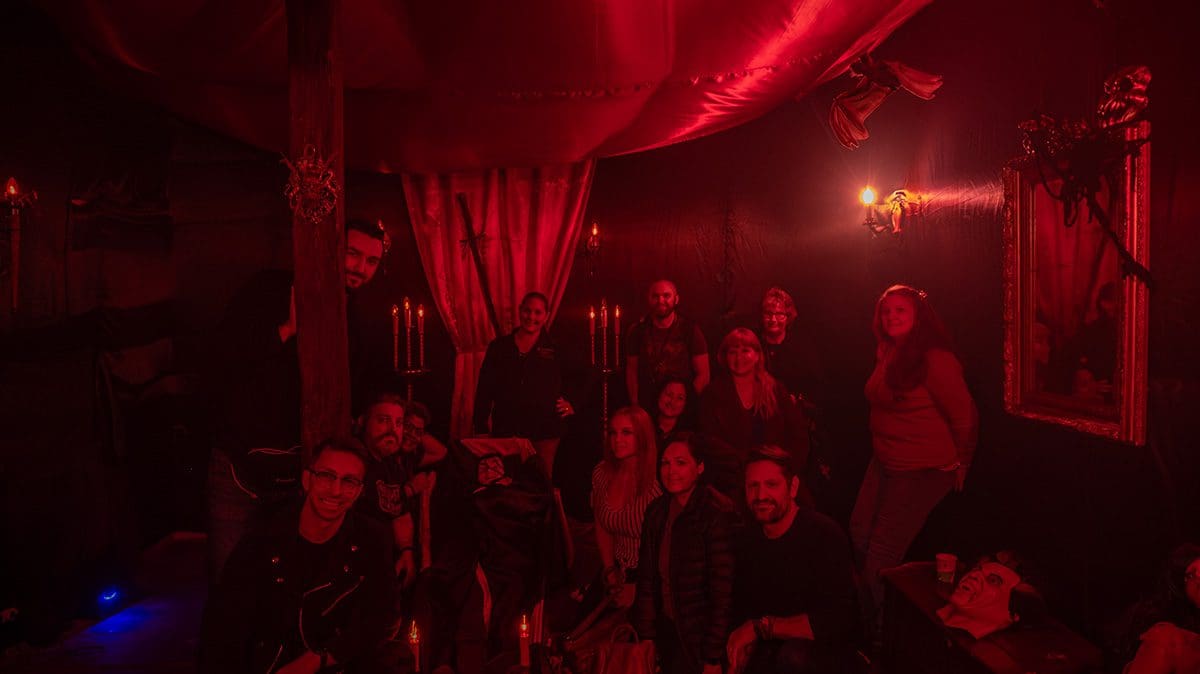
What the Research Actually Shows
For a long time, our enjoyment of fear was called the “paradox of horror.” Today researchers study it seriously under the name recreational fear.
Fun Fear Can Leave You Feeling Better
Sociologist Margee Kerr, author of Scream: Chilling Adventures in the Science of Fear, set up a makeshift lab at ScareHouse, an extreme adults-only haunted attraction in Pittsburgh. The team surveyed 262 guests before and after the roughly 35-minute experience and used mobile EEG to measure brain activity in 100 of them.
Guests reported significantly better moods afterward, and said they felt less anxious and less tired. Among those whose mood improved, the EEG data showed widespread decreases in brain reactivity — a pattern Kerr has noted resembles what's observed in people practicing mindfulness meditation. She has compared the effect to finishing a hard run or a difficult climb: uncertainty, challenge, physical intensity, then a real sense of accomplishment.
That's a familiar feeling to anyone who's climbed to a hilltop fortress at dusk. The reward isn't the fear. It's what's on the other side of it.
Finding Your Fear Sweet Spot Before You Book
At Aarhus University in Denmark, the Recreational Fear Lab monitored the heart rates of visitors moving through a haunted attraction and compared the data with how much people said they enjoyed it. Published in Psychological Science, the results showed an inverted-U curve: too much fear reduces enjoyment, but so does too little. The fun lives in the middle.
For travelers, this is the single most practical finding in the whole field. It explains why one person loves a hands-on overnight investigation while their friend has a far better night on an atmospheric history walk through the same city and why neither is doing it wrong.
Knowing roughly where your sweet spot sits should shape what you book. A guided folklore walk, a candlelit crypt, a castle with centuries of documented tragedy, and a full paranormal investigation are four very different intensities.
Three Kinds of Haunted Traveler
Surveying horror fans and later Danish haunted house visitors, the Aarhus team identified three broad profiles. They map neatly onto the people who show up on haunted journeys:
- Adrenaline Junkies are there for the rush. They want the investigation, the basement, the hour after midnight.
- White Knucklers feel fear intensely and take real satisfaction from getting through it. They're often the ones most changed by the experience.
- Dark Copers use frightening experiences as a way of processing stress, grief, or anxiety in ordinary life. For them, a place with a tragic history isn't entertainment — it's meaningful.
Most good groups contain all three, which is part of why these trips bond people so quickly.
A Word of Caution
Recreational fear isn't for everyone, and that's fine. People living with anxiety disorders, trauma, or certain heart conditions may experience scares very differently, and some historic sites involve genuinely difficult subject matter. The key word throughout this research is voluntary. The benefits appear when people choose the experience, feel in control, and know they can stop.

Paranormal Investigation At Leap Castle With Brian J. Cano
Dark Tourism: Travel With a Shadow
The term “dark tourism” was introduced in 1996 by Malcolm Foley and John Lennon of Glasgow Caledonian University, describing travel to places associated with death, disaster, and suffering. Researchers have since examined ghost walking tours as a mobile form of it.
The impulse is ancient. Crowds filled Roman amphitheaters to watch deadly spectacle and gathered in public squares to witness executions. Grand Tour travelers in the eighteenth century descended into catacombs and picked their way around still-warm volcanic ruins. Today people visit former prisons, quarantine islands, battlefields, and asylums.
Motivations vary, such as education, remembrance, curiosity about mortality, and yes, the pleasant shiver of standing somewhere with a dark past. What most dark tourism has in common is that it's a way of confronting something we otherwise keep at a distance. It is difficult to stand in a plague hospital and remain abstract about death.

The First Haunted House Story Was Really a Story About a Place
Around 100 AD, Pliny the Younger, the same Roman letter-writer who described the eruption of Vesuvius, wrote to his friend Sura asking whether he believed ghosts were real. To make his case, he described a house in Athens.
The house was large and handsome but had a terrible reputation. At night, residents heard iron clanging and chains rattling closer. Then a gaunt old man would appear, shackled at the hands and feet. Tenants fled, and the property was eventually abandoned and offered at a suspiciously low price.
The philosopher Athenodorus noticed the bargain, asked why it was so cheap, and rented it anyway. That night he sat writing by lamplight to keep his mind occupied. The chains came. The figure beckoned. He followed it into the courtyard, where it vanished, and he marked the spot with grass and leaves. The next day, magistrates dug there and found human bones tangled in chains. The remains were properly buried, and the haunting stopped.
Nearly two thousand years later, the template is untouched. Dickens gave Jacob Marley the same chains in A Christmas Carol. But notice what the story is actually built around: a specific address, a strange price, and a traveler curious enough to go and stay there himself. The oldest haunted house story in Western literature is, at heart, a story about going to see for yourself.
That instinct hasn't changed.
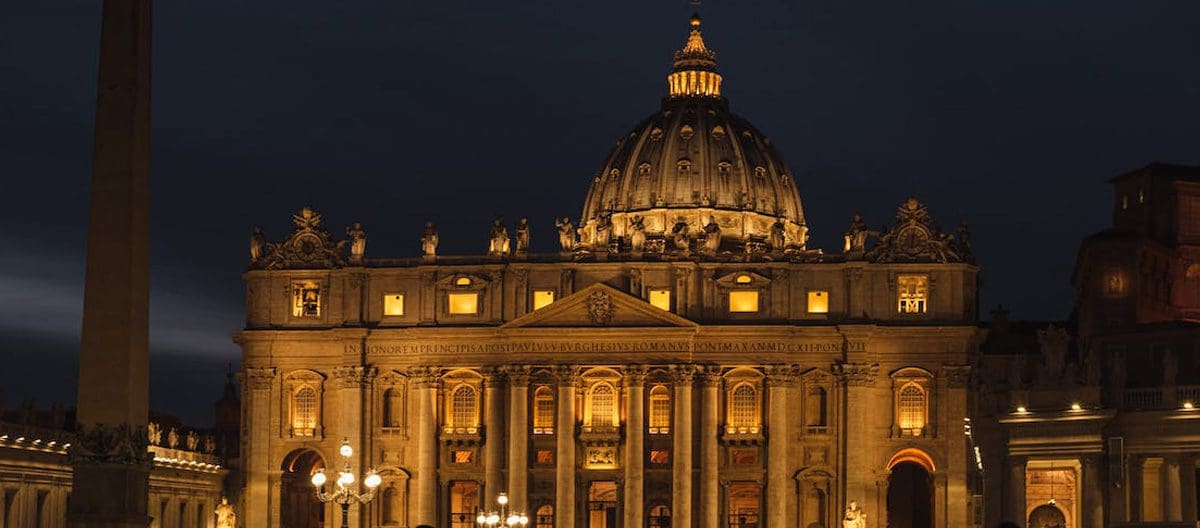
When Real History Becomes Legend
The most compelling haunted places are the ones with documented history underneath the folklore.
In Rome, the young noblewoman Beatrice Cenci was executed near Castel Sant'Angelo on September 11, 1599, after being convicted of involvement in the murder of her abusive father. Her story became one of the city's most enduring legends, and her ghost is said to return near the anniversary of her death. A few months later, in February 1600, the philosopher Giordano Bruno was burned at the stake in Campo de' Fiori, where his hooded statue still stands facing the Vatican. In the Venetian Lagoon, Poveglia Island served as a quarantine station long before it acquired its modern reputation as one of the most haunted islands in the world.
The executions and the quarantine are history. The ghost stories came later. But the legends are part of why these people are still spoken about at all. Folklore has been keeping their names alive for four centuries, which is more than most historical records manage.
If you want to see how that layering works across an entire country, our guide to haunted places in Italy traces it from the Venetian Lagoon through Florence and into Rome. For a very different cultural context, the history of the Skinwalker legend looks at why some stories deserve respect rather than investigation.
How to Travel to Haunted Places Well
Fear is only half of it. Doing this thoughtfully is what separates a meaningful trip from a cheap thrill.
- Learn the real history first. Understanding what actually happened makes any visit richer, and it makes the folklore more interesting rather than less.
- Remember the real people. Behind almost every legend are real prisoners, patients, or victims.
- Follow access rules. Many abandoned sites are closed for safety or legal reasons, and legitimate access is usually arranged in advance. Don't trespass.
- Respect active spaces. Cemeteries, churches, and memorials are places of mourning and worship for people who live there.
- Choose guides who separate fact from folklore. The good ones will tell you plainly which parts are documented, which are contested, and which are pure legend — and the story is better for it.
- Go in a small group. Atmosphere does not survive a crowd of forty people.
- Dress for the reality. Uneven cobblestones, stone staircases, unheated interiors, and dim lighting. Closed-toe shoes with grip, layers, and a small flashlight.

What a Haunted Exploration Actually Feels Like
This is where a lot of haunted travel goes wrong. Quick, surface-level ghost tours rush you past a few buildings, deliver some theatrical scares, and leave you knowing nothing you didn't know before.
Our Haunted Explorations are built on the opposite premise. Each journey is an immersive exploration of a place shaped by its own history, like the castles, historic estates, abandoned sites, villages, and landscapes chosen for cultural significance as much as for mystery. Groups are kept intentionally small to preserve atmosphere. Guides blend documented history, folklore, and firsthand accounts, and the pacing leaves room for curiosity and reflection rather than hustling you toward the next scare.
Some experiences include hands-on investigation. That isn't always the point. Understanding the place comes first, and anything unexplained becomes part of a larger story rather than the entire purpose of the evening.
They're also more accessible than people expect. Plenty of travelers join with no paranormal background at all, drawn simply to atmospheric, meaningful travel, and solo travelers tend to find these groups bond faster than most.
A few current journeys, each at a different intensity:
- Italy: Legends, Shadows & Hidden Realms — ten days from Venice through Tuscany to Rome with Nick and Tessa Groff, including full access to Poveglia Island for an exclusive investigation, May 21–30, 2027.
- Wraith Chasers Greece — ancient sites and myth in a country where the line between history and legend has always been thin.
- Bluegrass Shadows — Kentucky's haunted history, for travelers who'd rather not cross an ocean first.
- Halloween Haunted New Orleans at Sea — if you'd rather spend the season itself somewhere that takes it seriously. Our guide to Halloween in New Orleans covers what to expect.
You can browse every experience type — folklore walks, ancient mysteries, metaphysical journeys — or see all upcoming tours.
Stand Inside the Story
Halloween 2026 falls on Saturday, October 31. You can spend it the way most people do, watching something frightening from a safe distance, and there's nothing wrong with that.
But the feeling you're chasing when you watch a horror film in October is a diluted version of something you can experience directly. A real building. Real history. A guide who knows which parts are true. And the particular quiet that falls over a group of people standing somewhere that has seen more than they have.
Explore our Haunted Explorations →
If a question is standing between you and booking, send us a message — we reply within 24 to 48 hours. Not sure whether a journey matches your mobility or your fear sweet spot? Our Trek Levels Guide breaks down exactly what each trip asks of you physically.

Frequently Asked Questions
Why do we love to be scared?
When your brain confirms you're safe, the physical arousal from a scare doesn't disappear. It transfers into the next emotion you feel, usually excitement or relief. Researchers call this excitation transfer, and it's why people laugh seconds after jumping. Fear also triggers reward chemistry and leaves you with a sense of having faced something and come through it.
Is being scared good for you?
In controlled, voluntary doses, research suggests it can be. A study at an extreme haunted attraction found visitors left in better moods and reported feeling less anxious and less tired. Separate research found horror fans showed greater psychological resilience during the COVID-19 pandemic. This isn't true for everyone, particularly people with anxiety disorders, trauma, or heart conditions.
What is dark tourism?
Dark tourism is travel to places associated with death, disaster, or suffering like former prisons, battlefields, quarantine islands, and execution sites. The term was introduced in 1996 by researchers Malcolm Foley and John Lennon. Ghost walks and visits to reputedly haunted locations are generally considered part of it.
Are ghost tours actually worth it?
It depends entirely on the guide. A tour that only delivers jump scares is forgettable. One that grounds legends in documented history and is honest about which is which changes how you see a city for the rest of your trip. Look for small groups, real site access, and guides who can tell you what's verified and what isn't.
What's the difference between a ghost tour and a paranormal investigation?
A ghost tour is guided storytelling as you walk through a location. An investigation gives you time inside a site, usually after hours, with equipment and guidance to explore it yourself. Investigations are longer, quieter, and more demanding of patience, and many travelers find them far more affecting than they expected.
Do I need experience to join a paranormal investigation?
No. Most people on these journeys are doing it for the first time. The environment is guided and welcoming, and you engage at whatever level feels comfortable to you.
Do you have to believe in ghosts to enjoy haunted travel?
Not at all. A large share of travelers on these journeys are curious rather than convinced. The history is real regardless of what you conclude about the legends, and the best guides make that the foundation rather than an inconvenience.
Why do haunted places feel scarier at night?
Low light removes the visual information your brain relies on, so it fills the gaps with its best guesses, which is why shapes resolve into figures and ambiguous sounds seem to acquire intent. Cooler temperatures, silence, and unfamiliar architecture all amplify the effect. It's the same building. Your perception of it is genuinely different.
What should I bring on a nighttime haunted tour?
Comfortable closed-toe shoes with good grip for cobblestones and stone staircases, layered clothing since evening temperatures drop and historic interiors stay cold, and a small flashlight unless your guide says otherwise. Haunted explorations usually run rain or shine.
When is the best time of year for haunted travel?
Autumn is the classic choice: low golden light, thinner crowds, and the cultural weight of the season. Our guide to the best places to travel in fall covers where to go. Spring is an underrated alternative: many historic sites are far quieter, and European weather is kinder for long days on foot.
Can you travel to haunted places solo?
Yes, and many people do. Small-group journeys are among the easiest ways to travel alone without feeling alone shared experience bonds a group quickly, especially the kind that involves standing in the dark together.
Sources and Further Reading
- Kerr, M. “Why Is It Fun to Be Frightened?” The Conversation. theconversation.com
- Recreational Fear Lab, Aarhus University. Publications. cc.au.dk
- Scrivner, C., et al. “Pandemic Practice: Horror Fans and Morbidly Curious Individuals Are More Psychologically Resilient During the COVID-19 Pandemic.” pure.au.dk
- “The Science of Recreational Fear.” Discover Magazine. discovermagazine.com
- “The Origins of Halloween Traditions.” Library of Congress, Headlines & Heroes. blogs.loc.gov
- “All Saints' Day.” Encyclopaedia Britannica. britannica.com
- Pliny the Younger, Letters 7.27 (English translation). vroma.org
- Pew Research Center. “Many Americans Report Interacting With Dead Relatives in Dreams or Other Ways” (2023). pewresearch.org
- Gallup. “Paranormal Phenomena Met With Skepticism in U.S.” (2025). news.gallup.com
- “Mapping the Dark: A Bibliometric Examination of Research in Dark Tourism.” Cogent Social Sciences. tandfonline.com

DESCEND INTO ITALY’S SHADOWED PAST ON A 10-DAY PARANORMAL JOURNEY WITH NICK & TESSA GROFF
Journey into Italy’s haunted heart with Nick and Tessa Groff on a reimagined 10-day experience where beauty hides darkness, and history refuses to rest. From Venice’s misty waterways to Rome’s shadowed past, uncover plague islands, cursed castles, and secrets carved into stone. This isn’t sightseeing. It’s an immersive journey into Italy’s hidden truths and the unexplained.