

Frankenstein Castle, Germany: The Gothic Origins of Mary Shelley’s Frankenstein
Some stories do not stay in books.
They attach themselves to real places, hillsides, ruins, to the way wind moves through broken stone. They wait there, long after the last reader closes the cover.
Frankenstein is one of those stories.
Most people meet it as a monster tale first. A cautionary horror. But if you sit with it longer, you realize it is really a story about consequence. About curiosity that outruns wisdom. About what happens when we create something we do not yet know how to love.
And then, one day, you learn that Frankenstein is not only a novel.
It is also a real place.
A ruined castle in Germany, resting on a wooded ridge outside Darmstadt, carrying the name long before Mary Shelley ever wrote hers.
The first time you see it, it does not feel theatrical. There are no dramatic spotlights or curated shadows. Just weathered stone. Open sky. Silence that feels inhabited.
Frankenstein Castle does not perform.
It lingers.
Key Takeaways
- Frankenstein Castle is a real medieval ruin near Darmstadt and Frankfurt, long connected to Gothic lore, alchemy, and strange history.
- The site is associated with Johann Conrad Dippel, an alchemist born there, whose life and experiments helped shape later legends tied to Mary Shelley’s Frankenstein.
- The story of Frankenstein endures because it asks timeless human questions about creation, responsibility, and unintended consequence.
- Many travelers visit not for spectacle, but for atmosphere — to stand inside the landscape where story and history blur.
- The castle is most meaningful when experienced as part of a deeper journey through the regions that shaped Gothic imagination.
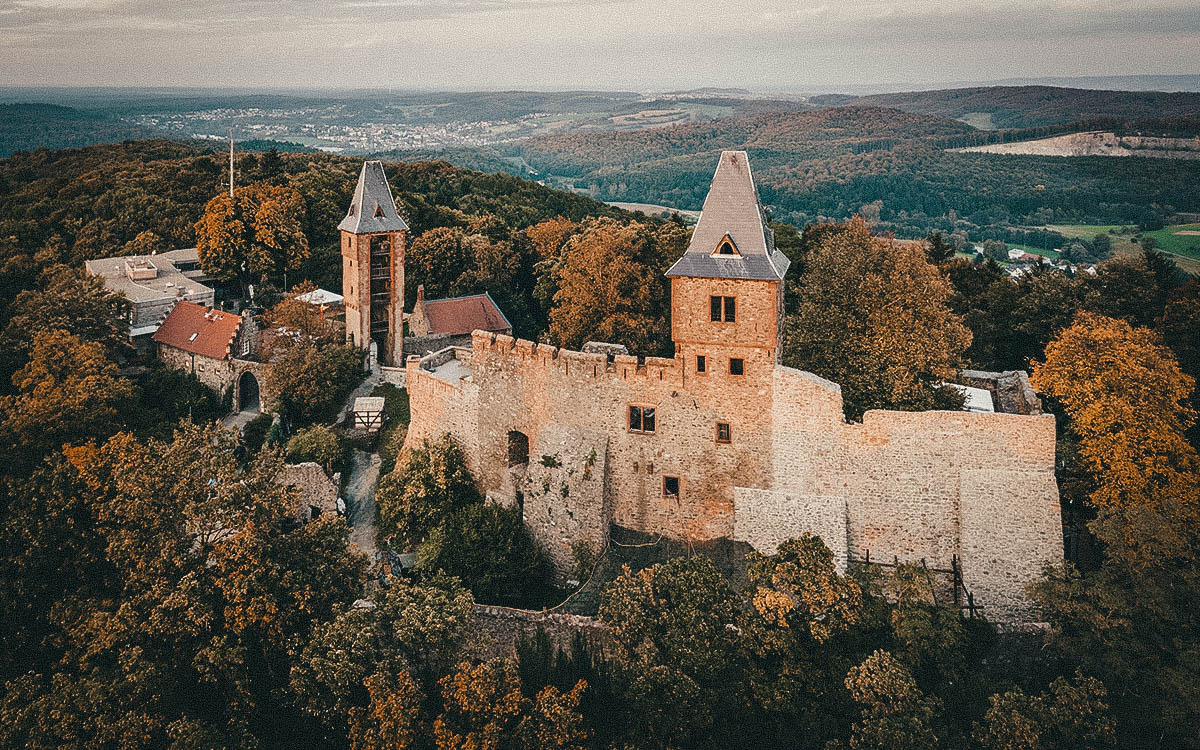
The facade of Burg Frankenstein, the real castle that inspired Mary Shelley’s gothic masterpiece.
A Real Place Behind the Legend
Burg Frankenstein sits on the edge of the Odenwald, just far enough from the city to feel removed from modern noise. You walk up through the forest, and the air changes before the view does. There is a hush to the trees, the kind that makes you aware of your own footsteps.
The castle itself is a ruin. Not restored. Not polished. Its walls are broken open to the sky. Moss chooses its own architecture. The weather has the final say.
And maybe that is why it feels honest.
You do not arrive to be entertained. You arrive and feel something settle in your chest — a quiet awareness that many lives, many ideas, passed through here before you.
Some places feel like they remember what humans forget.
The Gothic Thread to Mary Shelley
Mary Shelley wrote Frankenstein during a season of storms, grief, and restless thought. The novel is often called the first science fiction story, but it reads more like a moral meditation — a question about what happens when knowledge outpaces conscience.
The castle’s connection to her story winds through the figure of Johann Conrad Dippel. He was born at Frankenstein Castle in the 1600s — a theologian, alchemist, and controversial thinker who studied the nature of life and the soul. Rumors of his experiments traveled far, and like most rumors, they grew teeth over time.
Did Mary Shelley visit the castle? We may never truly know.
But she did travel the Rhine. She absorbed German lore. She moved among intellectual circles where Dippel’s name was known. Influence does not always arrive as a map. Sometimes it travels as an idea, a whisper, a story heard once and never forgotten.
The Gothic world thrives in that gray space between fact and folklore.
Crave a spine-tingling escape amid haunted stones and eerie lore?
Discover our 2026 Gothic Frankenstein Experience!
To keep up with our blog and other Mysterious Adventures offers, sign up for our newsletter!
Legend and the Castle’s Reputation
Locals have long spoken of strange feelings here. Of presences. Of an atmosphere that feels heavier than simple ruin should allow.
Not in a dramatic, ghost-tour way.
More like standing in a place where something significant was once attempted — intellectually, spiritually, experimentally — and the echo never fully left.
Some visitors say it feels watched. Others say it feels contemplative. Many simply go quiet.
Frankenstein Castle does not try to convince you of anything.
It exists whether you believe or not.
And that neutrality makes it more powerful, not less.
Why Frankenstein Still Speaks to Us
The story of Frankenstein has never really been about monsters.
It is about responsibility. About what we owe to what we create — whether that is life, technology, ideas, or futures. It asks what happens when brilliance arrives without tenderness.
Those questions feel even sharper now than they did in the 1800s.
Perhaps that is why people still feel drawn here. Not for fear, but for reflection. For the chance to stand in a place where one of humanity’s most enduring cautionary tales found its symbolic roots.
Experiencing It as a Journey, Not a Stop
Seen quickly, Frankenstein Castle is a ruin on a hill.
Experienced slowly — within the broader landscapes that shaped Gothic literature and Romantic thought — it becomes something else. A chapter in a larger narrative. A place where environment, history, and imagination braid together.
Some stories need space to unfold.
Some questions need time to surface.

On Halloween, Berg Frankenstein transforms into Germany’s biggest Halloween party.
A Living Gothic Legacy — Frankenstein Halloween: Switzerland & Germany
Something is fitting about encountering this story in autumn, when the world itself is thinning into shadow and gold.
The Frankenstein Halloween: Switzerland & Germany journey traces the environments that shaped Mary Shelley’s imagination — including the castle that shares her creature’s name.
With Sara Karloff guiding the experience, the focus is not performance but lineage. Not spectacle, but story. Halloween becomes less a costume and more a threshold — a time when reflection comes easier and old narratives feel closer to the surface.
It is not a reenactment.
It is remembrance.
Closing Reflection
Some places do not give answers.
They give atmosphere.
They give questions.
They give you a moment where past and present sit beside each other quietly.
Frankenstein Castle is one of those places.
You do not go there to chase horror.
You go to stand where a question once took root — and notice it is still alive in you.
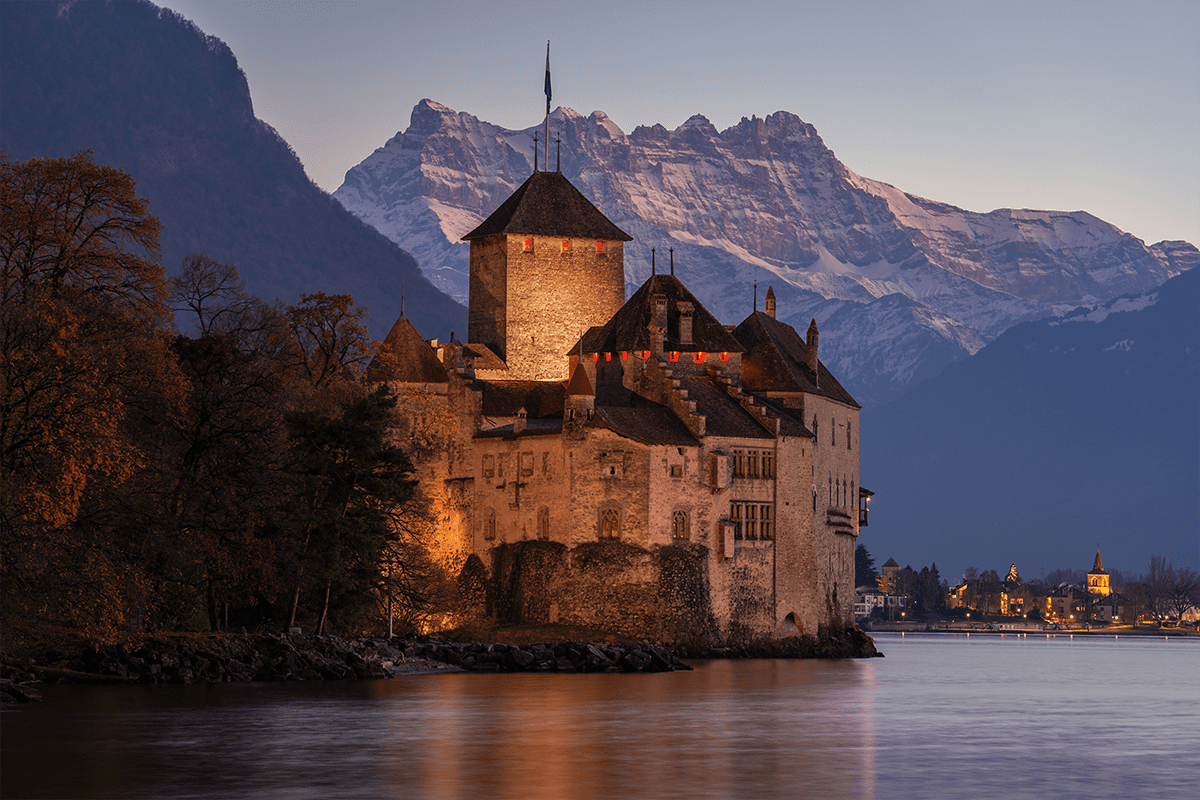
Experience the ultimate Halloween adventure on a 10-day Frankenstein-inspired tour through Europe’s most hauntingly beautiful landscapes.
Trace Mary Shelley’s footsteps from Geneva’s stormy lakeside to Germany’s eerie castles, where Gothic history and supernatural lore come alive. Celebrate Halloween night with an unforgettable festival at Frankenstein Castle, featuring ghostly tales, chilling performances, and Gothic revelry. Complete with ghost tours, a Rhine River cruise, and a paranormal investigation, this is the perfect journey for history, horror, and Halloween enthusiasts!


