

Haunted Guardians of History
There’s something almost magical about an old, abandoned building. When we step into a dimly lit corridor of a crumbling hospital or mansion, the air itself seems to hum with stories. It isn’t just our imagination: haunted locations have a powerful pull. And as strange as it sounds, these ghostly tales might be one of the last best ways to save our history.
We used to think of ghost stories and spooky tours as nothing more than thrills. But experts now say the same tours that send chills up our spines are also keeping historic landmarks from falling apart. A 2020 study in the Cornell Hospitality Quarterly found that haunted tourism has literally let old sites “remain intact” by “bringing in the money needed to make necessary improvements”. In other words, those night-time ghost tours, candlelit vigils, and creepy storytelling events are doing more than giving us goosebumps—they’re funding repairs, restorations, and upkeep for buildings that might otherwise be lost.
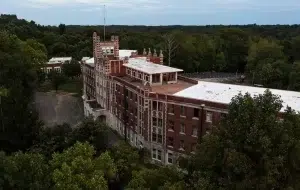
The Waverly Hills Sanatorium in Louisville, KY, an example of how haunted tourism and historic preservation go hand in hand.
Ghost Tours as Preservation Engines
It helps to break down how haunted tourism works its magic on historical preservation. Think of it as three key benefits: money, people, and awareness.
- Sustainable Funding: Many historic sites get too few daytime visitors to stay open. But throw in a ghost tour after dark, and suddenly people line up around the block. Haunted experiences provide a steady revenue stream for restorations. For example, many ghost-themed events have helped old hospitals, forts, and schools stay standing by funding necessary repairs.
- Community Involvement: When a town has a spooky attraction, locals often become the stewards. Volunteers step up as storytellers and guides, sharing family tales and legends, which renews local pride in their own heritage. Ghost-hunting groups and historical societies volunteer their time; townsfolk suddenly care deeply about preserving the creepy old jail or manor.
- Public Awareness: Ghost stories go viral. A chilling legend or viral TikTok clip of a spooky sighting can put a forgotten site back on the map. Sites “that may have been forgotten” suddenly attract curious visitors. Once tourists flood in—even for the thrills—the funding follows. In short, the ghosts market the place: they draw crowds and fill coffers, and those dollars help keep the lights on.
The unexpected truth is this: when paranormal enthusiasts invest in the mystery, they often become its fiercest protectors. Far from merely seeking thrills, they purchase tickets, contribute donations, and champion the preservation of haunted landmarks. Their passion transforms into stewardship. As a Cornell study affirms, haunted tourism has enabled historic sites “to remain intact,” sustained by the very funds generated in the pursuit of the spectral.
Eerie Economics in Action
The numbers show how big this effect is. Supernatural tourism isn’t a niche hobby—it’s a booming industry worth billions. In 2023 the global “dark tourism” market was estimated at about $31.9 billion, and a large slice of that is ghost-related travel. In many famous ghost towns and sites, paranormal tours now make up a huge share of tourism dollars. For instance, in Salem, Massachusetts, and Savannah, Georgia—two famously haunted cities—ghost tours now contribute around 20% of all tourism revenue. One report noted that Salem’s October hotel stays are overwhelmingly driven by Halloween and ghost-tour events. Even at a former prison in Missouri, ghost tours brought in over $780,000 in 2022 (60% of the month’s sales!) by selling paranormal investigations.
These aren’t isolated stories. Iconic sites have built preservation models around their hauntings. Eastern State Penitentiary in Philadelphia was once a crumbling ruin, but today it’s famous for its annual “Terror Behind the Walls” haunted house. Those Halloween profits pay the bills for maintenance year-round. And in Colorado, the Stanley Hotel (Stephen King’s inspiration for The Shining) thrives on its spooky reputation. It draws horror fans from everywhere—and they stay to admire the hotel’s grand architecture and history. As its caretakers note, “what many visitors come to appreciate is its stunning architecture, historic significance, and the preservation efforts that keep it alive, ghosts and all”. In short, we may come for the ghosts, but we leave with a love of history and a few dollars in the donation box.
Even a single ghost-themed evening at a historic landmark—whether a state park, an old frontier fort, or a centuries-old castle—can transform its finances, routinely selling out months in advance. By inviting those same visitors back for daytime tours, organizers convert initial paranormal curiosity into sustained attendance and revenue throughout the year. It’s this cycle of sold-out night events, repeat daytime visits, and enthusiastic word-of-mouth that has proven essential for funding preservation efforts and deepening community engagement.
Come be a part of an epic event of supernatural proportions!
Get the details of our LEAGUE OF THE MOST HAUNTED SUMMIT HERE!
To keep up with our blog and other Mysterious Adventures offers, sign up for our newsletter HERE!
Souls, Stories, and Connection
The magic of haunted locations isn’t just financial—it’s emotional. Standing alone in a pitch-black guest room or frozen in a former prison cell, visitors often feel a profound connection to the past. They’re not reading about history in a textbook; they’re experiencing it with their senses. As a cultural study notes, ghost stories “allow the visitor to connect to the stories of people in the very place where those people lived”. In other words, hearing about a Victorian lady in a painting or seeing an empty wheelchair in a dark hallway suddenly becomes personal.
This emotional engagement is pedagogy come alive. Researchers have found that history resonates most when it touches us personally. Hearing about a “Gray Lady” apparition in Liberty Hall (Kentucky) or feeling the chill in the room where Civil War soldiers screamed makes us care about those stories. Historians say people want numen—that is, a “transcendental experience” that gives them a visceral, emotional link to an earlier time. Ghost tours deliver exactly that. They weave firsthand tales and sometimes even dramatize them, bringing dusty archives to life. One site director observed that connecting through emotion can be more powerful than any intellectual lesson.
And when people feel that connection, they often become champions of the site. The enchantment economy—our craving for immersive experiences—means that a compelling haunted tour can inspire visitors to care. Instead of just passing through, they donate, volunteer, and tell others. They learn the real history behind the legend. A ghost story isn’t dismissed as fake folklore; it’s used as a bridge to the facts, the architecture, the lives once lived there. As one author puts it, we preserve haunted places not just for the ghosts, but to preserve the “stories that give meaning to people’s lives, those heartfelt stories woven around individual lives and places”.
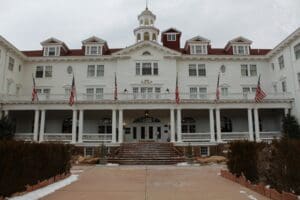
The Stanley Hotel, Colorado, USA. An inspiration for master of horror Stephen King.
Haunted Landmarks in the Real World
All this theory plays out in real places around the globe. Haunted locations survive today because their ghosts keep talking and people keep listening.
- Stanley Hotel (Colorado, USA): Known for The Shining, this grand hotel owes its vibrant tourism largely to ghost lore. Paranormal enthusiasts flock here year-round, filling rooms and tours. In return, the hotel invests in preserving its century-old architecture and history. The ghost stories and historical facts go hand-in-hand for visitors.
- The Ohio State Reformatory (Mansfield, Ohio): once a crumbling prison—and the real-life Shawshank set—it’s now a paranormal powerhouse. Signature events like Ghost Hunts and the Paranormal Institute routinely sell out months ahead, with every ticket dollar flowing straight back into restoring its soaring Gothic cell blocks. What began as a seasonal scare-fest has become the engine for year-round preservation and stewardship.
- Historic Sites Worldwide: Even abroad, haunted locations draw crowds that help keep them standing. Ireland’s Charleville Castle and Leap Castle (both in County Offaly) survived near-demolition thanks to ghost-tour revenue and public fascination. The Myrtles Plantation in Louisiana uses ghost tours to highlight antebellum history and fund maintenance. In short, whether it’s a southern mansion, a European castle, or an old battlefield, paranormal interest often translates into donations, grants, and volunteer help that salvage the structures themselves.
In each case, the equation is the same: Haunted + Human Interest = Hope for History.
Ghosts as Guardians
Haunted places are often sacred. Former hospitals, battlefields, asylums, and orphanages contain layers of human pain, bravery, and resilience. When we explore them, we’re acknowledging those who came before, especially the ones who had no voice in their time. Preserving a haunted site is an act of respect: it says, “your story matters.” Tours must also remember to handle this responsibility with care, presenting “historically accurate information” and honoring “the humanity of the people at those properties”. In other words, telling ghost stories can be powerful, but it should honor the people, not just sensationalize their suffering.
When done ethically, supernatural tourism transforms visitors into stewards. We’re not just sneaking through at midnight for a cheap thrill; we’re witnessing memory. Each ticket sale for a ghost tour is also a donation to preserving the brick-and-mortar and the tale-and-spirit of the site. Haunted tours have become grassroots preservation. Enthusiasts, ghost-hunters, and curious travelers are now the archival community, and old libraries and attics (and haunted corridors) are their shelves.
Maybe that’s the most surprising truth: we don’t just save haunted places — they save us, from forgetting who we are. In their creaking floors and shadowed corners, they lock in the voices of the past, reminding us of lives lived and lessons learned. Ghosts keep the stories alive long after textbooks fade. Every unexplained chill or whispered legend is a signal that history is still here, still teaching. As one passionate tour leader put it, walking those halls is more than entertainment; “When we walk through a haunted hallway…we are bearing witness. We are remembering.”
Join the Movement – Attend the Summit!
This isn’t a lonely journey, either. We at Mysterious Adventures Tours believe in bringing people together around this mission. That’s why we’re hosting “The League of the Most Haunted: A Supernatural Tourism Summit.” This is a groundbreaking event celebrating America’s most legendary properties while promoting supernatural tourism as a force for good. Attendees will meet the owners and caretakers of these haunted sites and hear the real-life legends straight from those who guard them.
If you feel called by history and mystery, this summit is for you. See how blending mystical storytelling with historical preservation can change the world of travel. You’ll step into a world where the eerie becomes enchanting and every spine-tingling moment reconnects us with the past. Join us in this new movement — help us transform curiosity into commitment.
Because at the end of the day, when we preserve haunted locations, we honor history. We ensure that the voices lingering in the dark still have somewhere to echo. And maybe, just maybe, a flicker in the shadows will remind us all why those stories matter.
 Step into a world where history, mystery, and the supernatural intertwine!
 Step into a world where history, mystery, and the supernatural intertwine!
The League of the Most Haunted: A Supernatural Tourism Summit is a groundbreaking event celebrating America’s most legendary esoteric properties while promoting a new and enchanting concept in travel—Supernatural Tourism. Presented by Mysterious Adventures Tours, this summit shines a light on the most spellbinding locations across the U.S., blending historical preservation with mystical storytelling. Attendees will meet the owners, caretakers, and managers of these enigmatic sites, hearing firsthand the legends and encounters that make them truly unique.


