

Italy’s Most Forbidden Island and the Power of Silence
Drifting through the Venetian Lagoon, there are places you pass without stopping — yet they linger longer than the ones you visit.
The boat moves quietly. The water glimmers. Venice glows in the distance like a dream rehearsing itself. And then someone gestures — not loudly, not dramatically — toward a low stretch of darkened land. Poveglia.
An island many locals refuse to set foot on.
Used first as a plague quarantine and later as a mental hospital, Poveglia is not entered, photographed up close, or explained loudly. It is approached quietly — and felt deeply.
This is not a story about ghost hunting.
It is a story about why silence, distance, and restraint can be the most powerful ways to experience Italy’s shadowed past.
Key Takeaways
- Poveglia Island is one of Italy’s most forbidden places, shaped by centuries of plague, isolation, and abandonment rather than folklore alone.
- The island’s impact comes from proximity, not access—being near it without landing heightens reflection, imagination, and emotional awareness.
- Poveglia is considered “haunted” because of memory and trauma, not spectacle, making it a symbol of how history imprints itself on landscapes.
- Transformational travel in Italy isn’t always about famous landmarks, but about engaging respectfully with places marked by silence and shadow.
Where Poveglia Lies — And Why It’s Avoided
Poveglia sits in the Venetian Lagoon, suspended between Venice and Lido, visible but unreachable.
It is officially closed to the public. No tours dock there. No tickets are sold. Boats may pass, but landing is restricted.
Ask locals about it, and the tone shifts. Not theatrical. Not conspiratorial. Simply… firm.
They avoid it.
Not because of superstition, but because of memory.
There are places in Italy where history feels celebrated — cathedrals, piazzas, Renaissance façades. And then there are places where history feels heavy. Poveglia belongs to the latter.
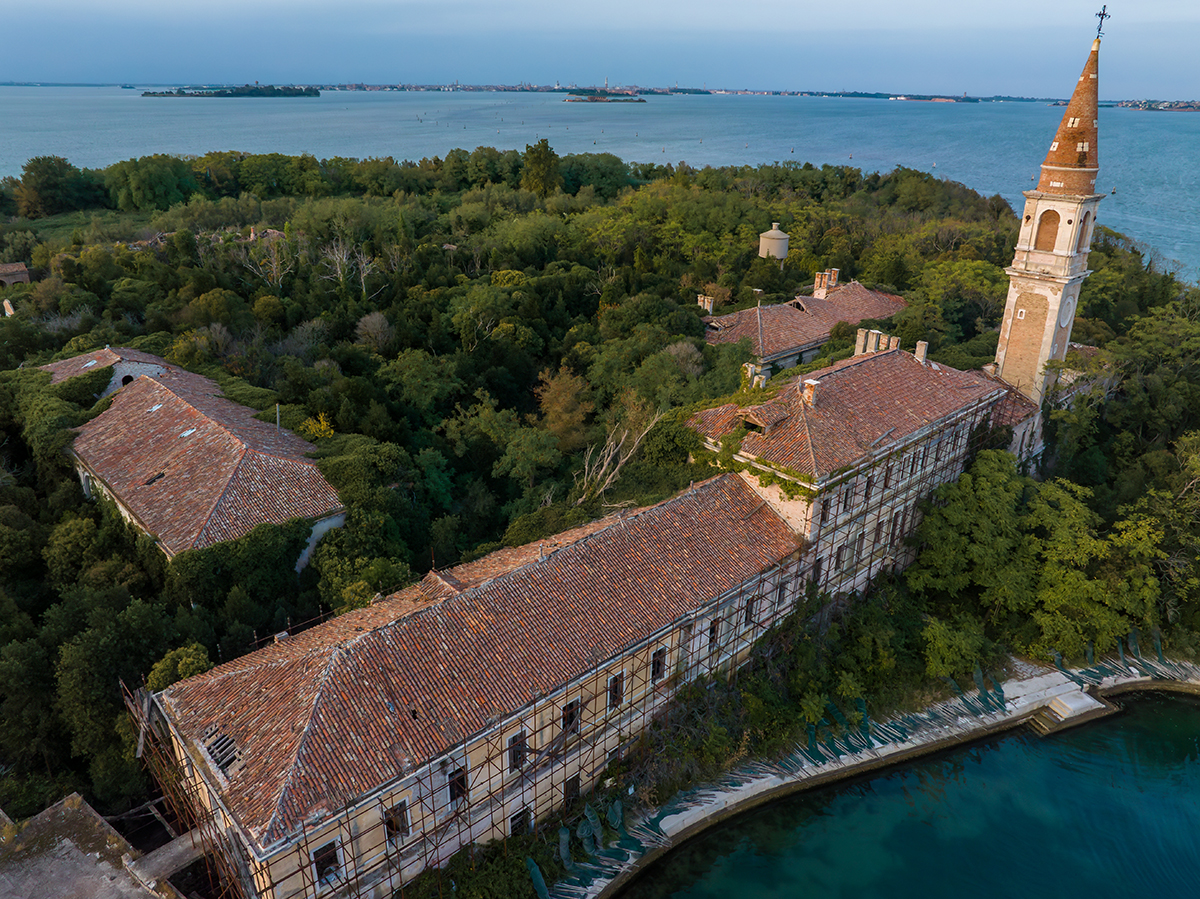
plagued ghost island of Poveglia in the Venetian lagoon.
Plague, Isolation, and the Weight of History
Most extensively used as a quarantine island in the 18th century during plague outbreaks.
Ships arriving in Venice would divert suspected cases there. The sick were isolated. The dying were separated. The dead were buried in mass graves.
Thousands passed through the island’s narrow threshold.
This is not folklore. This is documented history.
When people call Poveglia “haunted,” what they are often responding to is not a ghost story — but the residue of mass suffering. The knowledge that entire chapters of human fear unfolded there.
Italy carries beauty easily.
It also carries grief.
From Hospital to Abandonment
In the 20th century, Poveglia was repurposed as a mental hospital.
Isolation continued — now framed as treatment. Patients were housed within crumbling structures, separated again from society. Eventually, the hospital closed. The island was abandoned.
Buildings remain in decay. Windows hollowed. Roofs collapsing into themselves.
It is not curated ruin. It is not a romanticized relic.
It is simply left.
And sometimes, abandonment feels louder than preservation.
Haunted Castles & Dark Legends Await.
Craving a trip that immerses you in mystery and magic?
Explore our selection of tours for your next 2026 adventure!
To keep up with our blog and other Mysterious Adventures offers, sign up for our newsletter!
Haunted or Remembered?
Poveglia is often described as one of the most haunted islands in Italy.
But perhaps the word haunted is too small.
What lingers there may not be spirits, but memory. Trauma imprints itself into landscapes the way wind shapes stone. When thousands suffer in one place, that place does not reset to neutral.
To stand near Poveglia — even from the water — is to feel something unsettled.
Not spectacle.
Not performance.
Something quieter.
History that has not been turned into entertainment.
The Power of Silence in Travel
In a culture of access — where every site is photographed, monetized, and optimized — Poveglia remains unreachable.
And that distance is the point.
Approaching but not entering changes the experience. It heightens awareness. It forces reflection. There is no checklist, no guided script, no souvenir.
Just water. Wind. And a shadowed shoreline.
Sometimes, being near something without consuming it is the deeper encounter.
Silence creates space.
And space allows history to breathe.
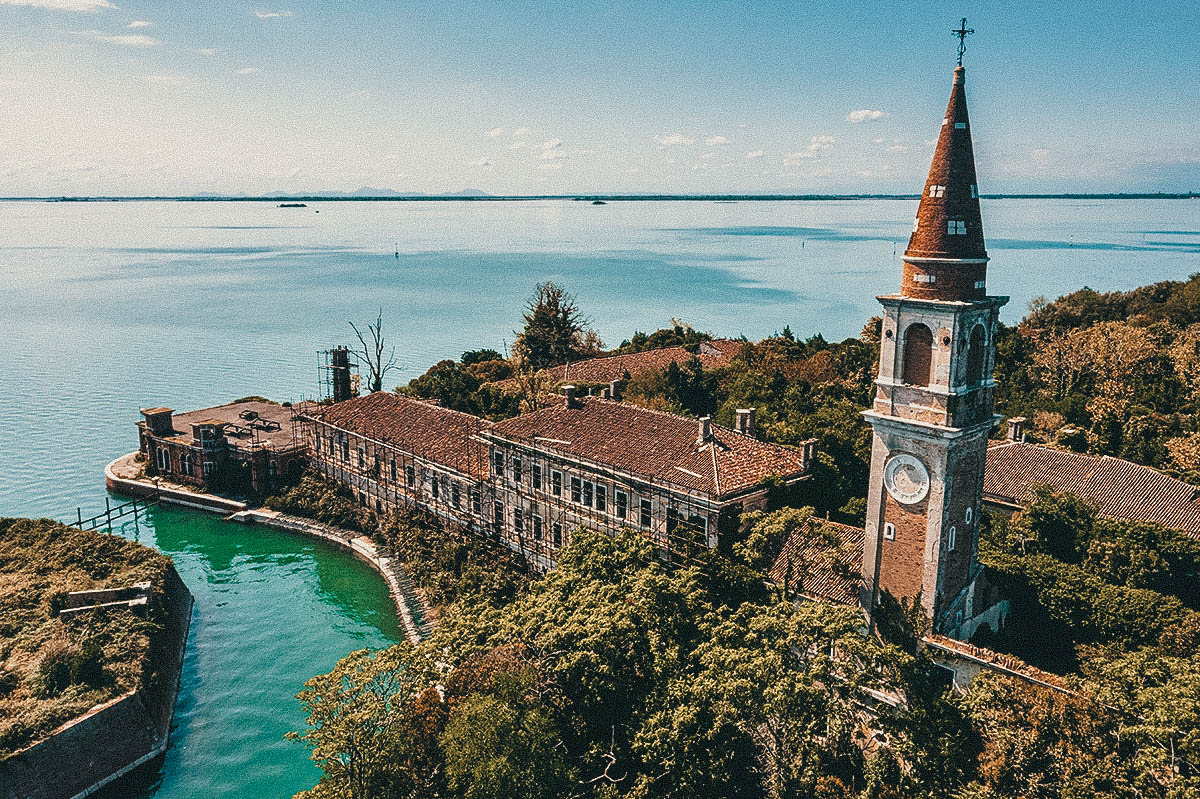
The abandoned island of Poveglia is filled with legends of ghosts from its disturbing past.
Why Forbidden Places Matter
Italy is layered with places like this — abandoned villages in the Apennines, plague sites beyond city walls, ruins swallowed by time.
Not everything is meant to be accessed.
Limits create reverence. Boundaries preserve dignity. Some sites are not attractions but reminders.
When we accept that not all places are ours to enter, we shift from tourism to witness.
What Poveglia Teaches the Modern Traveler
Poveglia teaches restraint.
It reminds us that transformation in Italy does not always come from grand landmarks or iconic façades. Sometimes it comes from slowing the boat, lowering your voice, and allowing silence to do its work.
Ethical travel is not about how much you see.
It is about how deeply you feel.
And perhaps the island’s greatest lesson is this:
Some places ask to be explored.
Others ask to be acknowledged.
Poveglia belongs to the latter — an island that teaches travelers that silence, distance, and restraint can be the most profound forms of respect.
FAQs
Is Poveglia Island really haunted?
Poveglia is often called a haunted island due to its history as a plague quarantine and mental hospital. While ghost stories exist, its unsettling reputation is rooted more in historical trauma and collective memory than documented paranormal activity.
Can you visit or land on Poveglia Island?
No. Landing on Poveglia is restricted. Visitors may legally view the island only from the water, which many believe enhances its emotional and symbolic impact.
Why do locals avoid Poveglia Island?
Many locals avoid Poveglia out of respect for its past. The island represents centuries of suffering and isolation, making it culturally sensitive rather than simply “scary.”
Are there other forbidden or dark history sites in Italy?
Yes. Italy is layered with shadowed history — from abandoned villages to plague sites and ancient ruins — many of which reveal deeper stories when approached thoughtfully.

Descend into Italy’s Shadowed Past on a 7-Day Paranormal Journey with Nick & Tessa Groff
Journey into the hidden and haunted heart of Italy with Nick Groff and Tessa Groff on a re-imagined seven-day experience where beauty masks betrayal and history refuses to rest. Travel from the mist-shrouded waterways of Venice through Renaissance intrigue and medieval cruelty, uncovering plague islands, cursed castles, and dark legends woven into stone. Explore haunted estates, forbidden shores, and cities shaped by executions, inquisitions, and whispered curses before arriving in Rome, where centuries of power and sacrifice converge—and where deeper mysteries await those who choose to continue. This is not a sightseeing tour; it is an immersive passage through Italy’s shadowlands, crafted for travelers drawn to history’s hidden truths and the unexplained.


