

The Real Frankenstein Castle Exists — And Its Legends Are Even Darker Than Fiction
For more than two centuries, Frankenstein has haunted our imagination. The creature. The lightning. The lonely creator is desperate to command life itself. But the monster wasn’t born in Hollywood. And the story didn’t begin in a laboratory.
It began in Europe, in castles, libraries, and storm-lit lakes, where whispers of alchemy, resurrection, and forbidden science were already alive. And yes, Frankenstein Castle is real. Its history is darker than the novel ever hinted at.
Now, with Guillermo del Toro’s upcoming Frankenstein preparing to return the creature to the cultural spotlight, travelers and story-lovers are once again drawn to the places where Mary Shelley’s Gothic vision first took shape.
For lovers of haunted travel, literary mystery, and Gothic storytelling, this is a journey through imagination and shadow — across Switzerland, Germany, and the soul of a legend that refuses to die.
Highlights
- Frankenstein Castle in Germany is real, and its history—especially the dark legends of alchemist Johann Konrad Dippel—may have influenced Mary Shelley’s creation of Frankenstein’s monster.
- Mary Shelley conceived Frankenstein in 1816 at Villa Diodati in Geneva, during the mysterious “Year Without a Summer,” where storms, debate, and Gothic settings shaped her visionary tale.
- Switzerland and Germany hold key locations that inspired the novel’s mood, including Château de Chillon, the Black Forest, and Heidelberg’s Alchemy Tower—each tied to Gothic lore, alchemy, and forbidden science.
- Ingolstadt, Germany, is the fictional birthplace of the monster, rooted in the real city’s history of medical experimentation and Enlightenment-era anatomical research.
- Today, Frankenstein’s legacy lives on through tourism and pop culture, from Halloween festivals at Frankenstein Castle to Guillermo del Toro’s upcoming film adaptation, renewing global interest in the legend.
A Stormy Night in Geneva — The Birth of Frankenstein
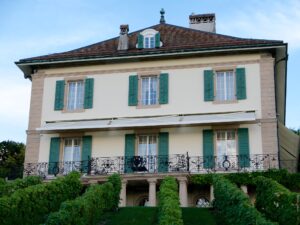
Villa Diodati, the birthplace of Mary Shelley’s “Frankenstein.”
The year was 1816 — the infamous Year Without a Summer, when volcanic ash clouded the skies and Europe fell into an eerie cold twilight.
Mary Shelley, just eighteen, stayed at Villa Diodati along Lake Geneva with Lord Byron, Percy Shelley, and John Polidori. Storms rolled endlessly across the lake. Candlelight flickered. The night seemed permanent.
Amid lightning and philosophical debate about the nature of life, Mary dreamed of:
“The pale student of unhallowed arts kneeling beside the thing he had put together.”
It was here the modern monster was born.
Switzerland’s Gothic Castles and Haunted Beauty
Just beyond Geneva lies Château de Chillon, a fortress mirrored in still water. Its dungeons, arches, and echoing halls held stories of prisoners, poets, and lost souls — and its Gothic presence imprinted itself deeply onto Romantic writers of the era.
Mary Shelley’s travels through this moody Swiss landscape, immortalized by Lord Byron’s The Prisoner of Chillon, helped inspire the novel’s tone of exile, longing, and spiritual isolation.
Germany’s Dark Alchemy — Enter Frankenstein Castle
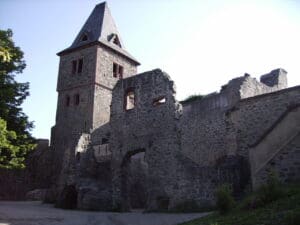
Castle Frankenstein, a likely inspiration for Mary Shelley’s ‘Frankenstein.’
High above the Odenwald Forest stands Frankenstein Castle, crumbling and dramatic against the skyline. But the true horror here lies not in the stones, but in the man who once inhabited them:
Johann Konrad Dippel, an alchemist, experimental chemist, and rumored grave robber.
He wrote about capturing the soul at the moment of death. Local legends claimed he tried to reanimate the dead. His laboratory sat inside Frankenstein Castle itself. Travelers in Mary Shelley’s day certainly knew the tale.
And whether by rumor, coincidence, or subconscious echo, the name Frankenstein had already taken root.
The Black Forest & Heidelberg — Germany’s Gothic Soul
The Black Forest is steeped in older, stranger stories of spectral riders, cursed bridges, witch-haunted valleys, and the Devil’s Mill where the wheel turns on its own.
Just beyond, Heidelberg Castle stands in noble ruin. It’s Alchemy Tower still whispers of ambition, transformation, and obsession, all themes at the center of Frankenstein.
It is easy to imagine Victor here — chasing knowledge too far.
Haunted Castles & Dark Legends Await.
Craving a trip drenched in medieval mystique and spectral tales?
Delve into the 2026 Germany Gothic Legends Tour—if you dare-!
To keep up with our blog and other Mysterious Adventures offers, sign up for our newsletter!
Ingolstadt — The Birthplace of the Monster
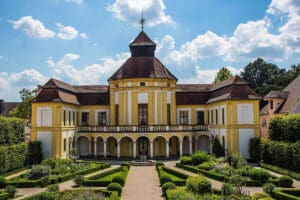
The University of Ingolstadt,once a hub of medical study and anatomical research, became part of the foundation of the Frankenstein legend.
In the novel, Victor Frankenstein conducts his experiment in Ingolstadt, where the real University of Ingolstadt was once a hub of medical study and anatomical research.
Its old lecture halls and medical chambers remain — still heavy with the memory of inquiry that pushed beyond the acceptable edges of science.
Frankenstein Today — Haunted Castles and Hollywood Revival
Each autumn, Frankenstein Castle hosts one of Europe’s most atmospheric Halloween festivals, where firelight, masks, costumed phantoms, and folklore come to life among the ruins.
And now, Guillermo del Toro’s adaptation (2025–2026) has reignited the world’s fascination with the creature not as a monster, but as a tragic mirror of humanity itself.
Travelers are beginning to return to these places — tracing the Frankenstein Trail across Europe, where myth, history, art, and grief intertwine.
Why Frankenstein Still Haunts Us
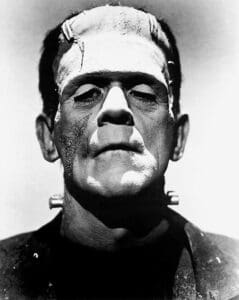
Boris Karloff as the creature in the 1931 film “Frankenstein.”
Frankenstein endures because it asks us questions we still fear to answer:
What does it mean to create?
What happens when love fails the outsider?
How far will we go to conquer death?
Mary Shelley wrote a monster story — but she also wrote a story about being human.
And that is why we still follow its footsteps.
Mysterious Adventures Tours is committed to exploring where myth, history, and spirit continue to breathe.
FAQ
- Is Frankenstein Castle real?
Yes — it’s located near Darmstadt, Germany, and open to visitors. - Who was the real Dr. Frankenstein?
Johann Konrad Dippel, an alchemist who lived at the castle. While some believe he inspired Mary Shelley’s creation, the connection remains speculative. - Where did Mary Shelley write the novel?
At Villa Diodati near Lake Geneva in 1816, during the famed “Year Without a Summer.” - Is a new Frankenstein film coming?
Yes — Guillermo del Toro’s adaptation is expected to be released between 2025 and 2026.
Something Electrifying Is Coming…
A new Frankenstein Halloween Tour across Switzerland and Germany is taking shape — castle by castle, shadow by shadow.
Be the first to know when the gates open.

Unlock the haunted heart of Germany on a 10-day supernatural odyssey with Mike Ricksecker & Katherine Swinn
Wander through ancient castles, dark forests, and legendary towns where folklore lingers in every shadow. This Halloween, journey deep into the Black Forest and along the mystical Rhine River—uncovering chilling ghost stories, exploring eerie ruins, and joining exclusive paranormal investigations led by one of the field’s most respected explorers. From haunted wine cellars to timeless legends, this tour is crafted for seekers of mystery, history, and spine-tingling adventure.


