Yule: The Ancient Winter Solstice Festival of Darkness, Light, and Rebirth
Long before the year learned how to rush itself toward an ending, before strings of lights insisted on cheer and calendars barked deadlines, there was Yule, the longest night. A night that did not ask to be conquered or brightened, only witnessed.
Across ancient Europe, people gathered not to celebrate completion, but to keep watch. The sun had reached its weakest point. The land had drawn inward. Breath fogged the air. Fire mattered. Silence mattered more. Yule was not a festival of noise; it was a vigil. A collective agreement to sit inside the dark without flinching, to recognize that stillness is not failure, and that nothing truly returns unless it has first been allowed to rest. In the flicker of flame against stone and timber, people remembered something elemental: the light does not disappear forever. It retreats, it gathers itself, and then, patiently, it comes back.
Highlights
- Yule is an ancient pagan winter solstice festival centered on the longest night of the year, symbolizing the rebirth of the sun and the slow, faithful return of light after darkness
- Predating Christmas by centuries, Yule originated among Germanic, Norse, and Celtic cultures, emphasizing cycles of rest, renewal, and continuity rather than endings or triumph
- Core Yule symbolism—including fire, candlelight, evergreens, and the Yule log—reflects survival, protection, ancestral connection, and the assurance that life endures even in winter’s deepest stillness
- Spiritually, Yule reframes darkness as fertile and necessary, teaching that transformation and rebirth begin quietly beneath the surface before becoming visible
- Modern Yule observance and winter solstice travel focus on presence, ancestral remembrance, and alignment with natural rhythms, often experienced at ancient solstice-aligned sites across Europe
 What Is Yule? Understanding the Ancient Winter Solstice Festival
 What Is Yule? Understanding the Ancient Winter Solstice Festival
Yule arrives at the deepest inhale of the year. The night stretches wide and unbroken, the sun sinking to its lowest arc before it dares to turn again. Somewhere between December 20 and 23, the world reaches this quiet brink, not as a date circled in ink, but as a felt experience. Ancient people knew it without instruments or charts. They felt it in their joints, in the way cold sharpened the dark, in how firelight became a necessity rather than an ornament. This was not symbolism. This was survival.
And when the sun began its slow return, so subtle it could almost be missed, it meant everything. Yule was never confined to a single night. It unfolded over days, sometimes weeks, because renewal takes time to register. It marked the hinge of the year: the moment when what appeared finished loosened its grip, and what had been buried began to stir. The light did not arrive triumphantly. It returned faithfully. And that was enough.
The Pagan Origins of Yule
The roots of Yule run deep into pre-Christian Europe, shaped by Germanic, Norse, and Celtic peoples who understood the solstice as sacred long before doctrine tried to explain it.
Among the Norse and Germanic cultures, Yule (Jól) was a time of feasting, fire, and remembrance. Ancestors were honored. Fires were lit not for spectacle, but for protection. Winter was dangerous, and ritual was practical as much as it was spiritual. Among the Celts, the solstice existed as a threshold, a night that stood slightly outside ordinary time. The veil felt thinner. Guidance felt closer. This was not superstition; it was attentiveness.
Yule was never a single ceremony performed on command. It was a span of nights, room enough for storytelling, offerings, divination, and the slow recalibration of the human spirit.
Darkness, Light, and Rebirth — The Spiritual Meaning of Yule
 Darkness, Light, and Rebirth — The Spiritual Meaning of Yule
Unlike modern holidays that scramble toward brightness, Yule begins exactly where we are least comfortable, inside the dark.
Darkness, to ancient peoples, was not something to defeat. It was fertile. Instructive. Necessary. Winter demanded stillness and honesty. It stripped life down to essentials and asked uncomfortable questions: What will last? What must rest? What no longer needs to be carried?
The return of the light was not an escape from darkness, but a response to it. Growth did not announce itself. It began invisibly, beneath frost and soil. Rebirth at Yule was internal first. It was not about what had ended, but about what had been quietly forming all along.
Traditional Yule Symbols and Their Meanings
The Yule Log
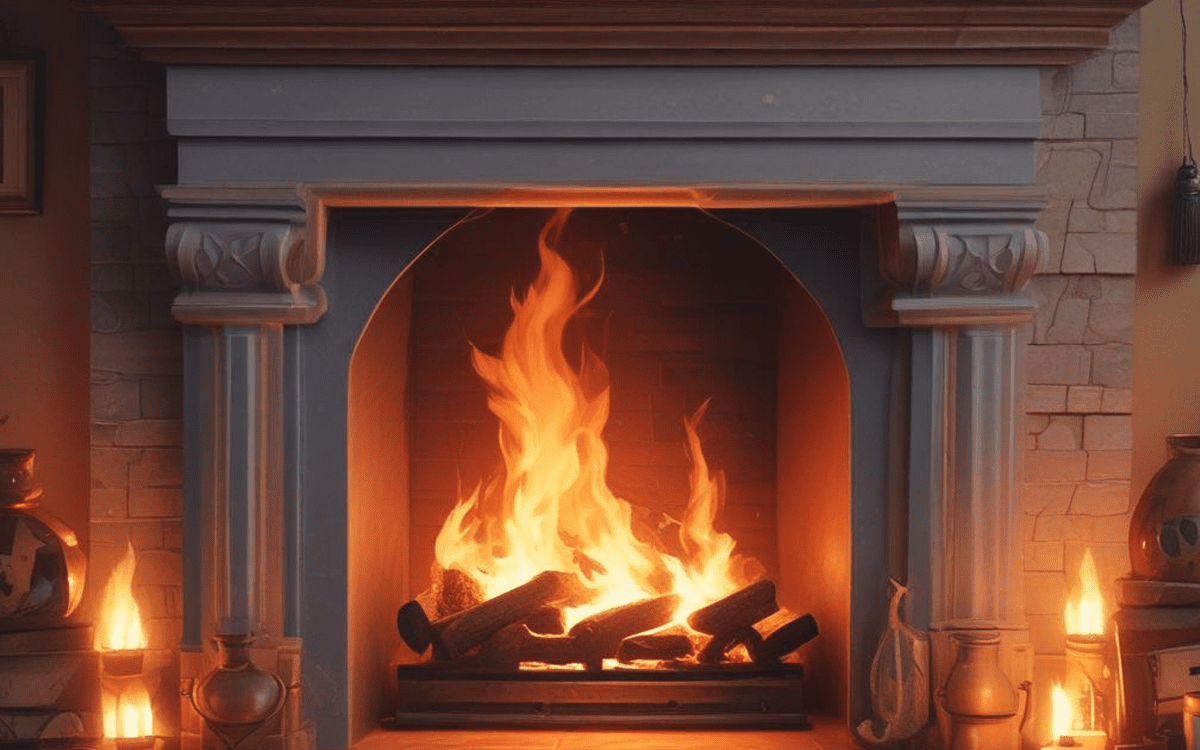
The Yule log was not burned casually. Often carried over from the previous year, it represented continuity, the decision to keep the flame alive. Its ashes were saved for protection, blessing, and healing, a physical reminder that warmth could be carried forward even in the harshest seasons.
Evergreens and Sacred Plants
Pine, fir, holly, and ivy were not decorative gestures. They were declarations. Life endures, even here. Even now. Green was not optimism—it was proof.
Fire and Candlelight
Each flame lit during the solstice night was an act of trust. A quiet promise made without certainty: the light will return.
Norse Yule Traditions and the Wild Hunt
 Norse Yule Traditions and the Wild Hunt
In Norse tradition, the nights of Yule belonged partly to the dead. Odin was said to lead the Wild Hunt across winter skies, a procession of spirits, ancestors, and forces older than comfort.
This was not a tale meant to terrify. It was a reminder. The living and the dead were not strangers. Feasts were shared. Stories were told. Offerings were made. Protection came not from denial, but from acknowledgment. Winter was a liminal journey, and no one traveled it alone.
Ready to start the new year off with a little mystery?
Discover more about our selection of tours for your next spiritual journey!
To keep up with our blog and other Mysterious Adventures offers, sign up for our newsletter!
Yule vs. Christmas — Ancient Traditions Beneath Modern Celebrations
Many customs now associated with Christmas originated in Yule traditions:
- Evergreen decorations
- Candle rituals
- Seasonal feasting
- Gift-giving as a blessing
When Christianity spread, these symbols were absorbed rather than erased. The rebirth of the sun became the birth of Christ. Sacred fire became holy light. The story shifted, but the human need beneath it remained the same.
Light returns.
How Yule Is Celebrated Today
 How Yule Is Celebrated Today
Today, Yule looks different for everyone; some may
- Create solstice altars
- Do candle rituals and meditation
- Set intentions for the coming year
- Honor ancestors and personal cycles
Modern observance is less about reenactment and more about alignment—choosing stillness in a culture that rewards momentum, choosing meaning over noise. Yule does not demand belief. It asks only for presence.
Sacred Places Where Yule and the Winter Solstice Are Still Honored
Across Europe, ancient places remain aligned to the solstice:
- Stone circles and megalithic sites
- Prehistoric temples and burial mounds
- Remote Alpine and Northern regions
Standing in these places during the solstice feels different than reading about them. The land remembers. And sometimes, it reminds us.
Why the Winter Solstice Draws Modern Seekers and Travelers
Today’s solstice travelers seek slower, deeper experiences:
- Connection to ancestry
- Alignment with Earth cycles
- Meaning beyond commercial holidays
Winter solstice journeys are not about escape, but return—to rhythm, to self, to silence.
 Honoring Yule in Your Own Way
 Honoring Yule in Your Own Way
Yule does not require elaborate ritual. It asks only for presence.
- Light a candle.
- Walk beneath winter stars.
- Sit long enough to notice the quiet.
Carry the solstice forward not as a date, but as a practice.
Yule & Winter Solstice FAQs
What does Yule symbolize spiritually?
Yule symbolizes rebirth, renewal, and the return of light after darkness.
Is Yule a pagan holiday?
Yes. Yule is an ancient pagan winter solstice festival predating Christianity.
How long does Yule last?
Traditionally, Yule could last several nights, often twelve in Norse cultures.
What cultures celebrated Yule?
Germanic, Norse, and Celtic societies across Europe.
Where can you experience authentic winter solstice traditions?
Northern Europe, Celtic lands, and ancient solstice-aligned sacred sites.
A Solstice Reflection
Yule teaches us that transformation does not begin in brightness. It begins in the courage to stay present when things go quiet. Whether marked with ancient stone or a single flame on a kitchen table, the longest night reminds us of something enduring:
The light returns.
And so do we.
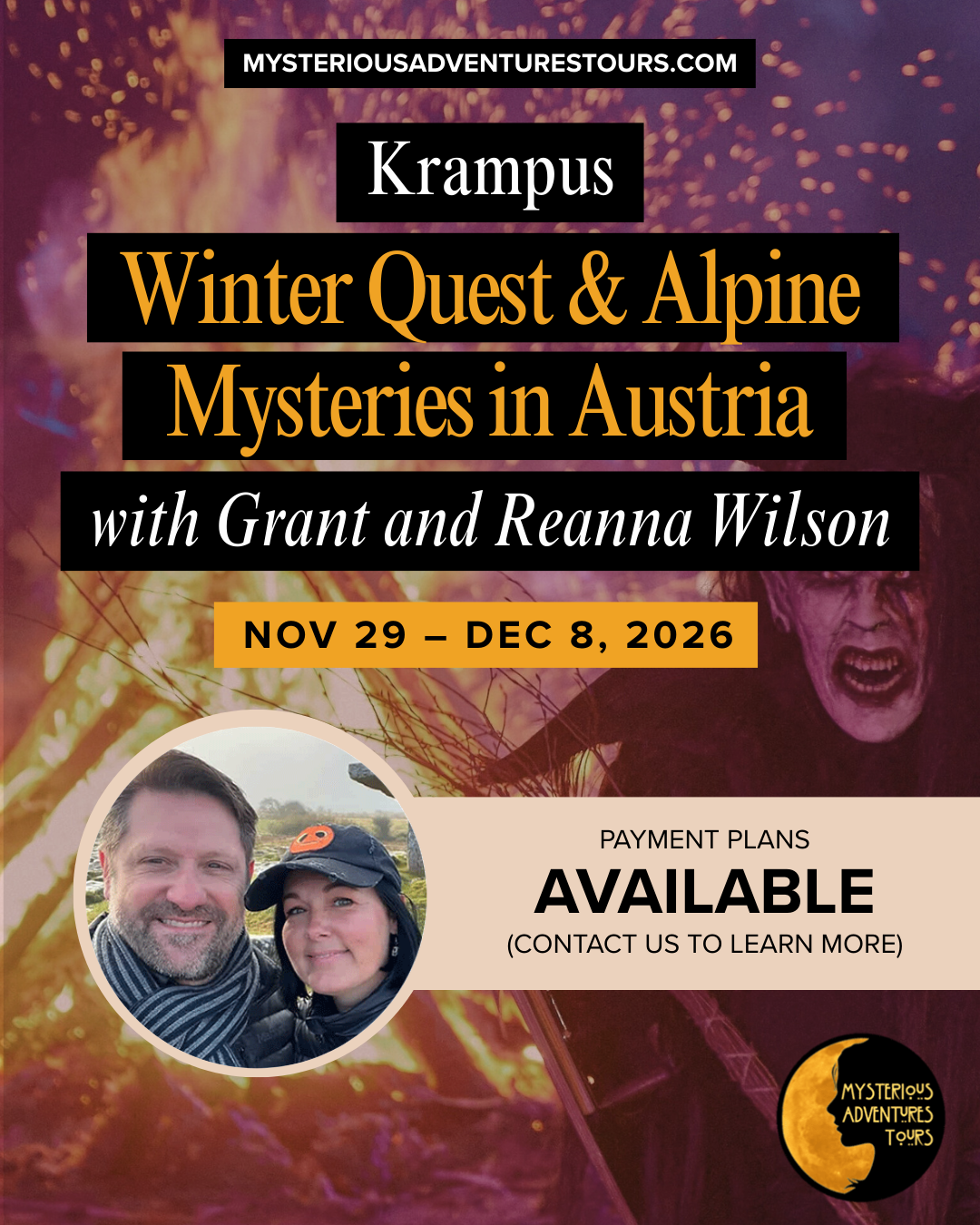
Prepare for a 10-day winter journey where festive magic meets ancient Alpine folklore.
Join Grant and Reanna Wilson on an unforgettable adventure through Austria’s snow-covered cities and mountain regions, experiencing glittering Christmas markets, historic castles, and the electrifying traditions of Krampusnacht and the Krampusläufe. From imperial Vienna to the heart of the Alps, this immersive journey blends living folklore, winter legends, and supernatural mystery into an experience that will enchant, thrill, and stay with you long after the snow melts.